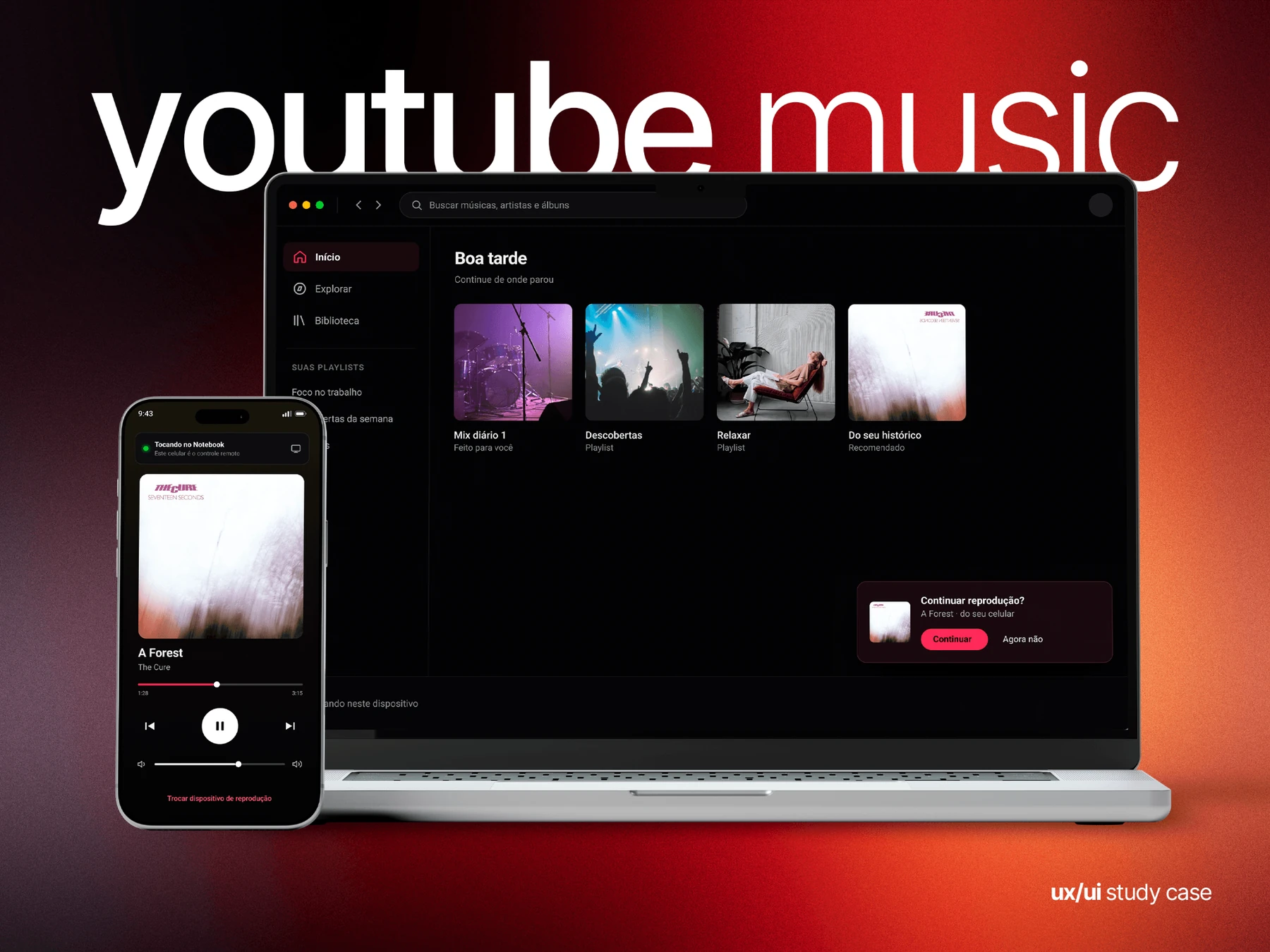
YouTube Music
EXPLORE THE CASECASE 03 / ACADEMIC AND CONCEPTUAL STUDY / 2026
The music continues.
Even when the device changes.
- MY ROLE
- Research, testing and UX/UI
Individual project - CONTEXT
- Academic study · EBAC
Not affiliated with YouTube - PLATFORMS
- Mobile and desktop
- TOOLS
- Figma and Claude Code
30-second overview
- Problem
- Switching devices interrupted listening in the experience observed during the study.
- My contribution
- I analyzed reports, tested the existing experience and designed an assisted session transfer.
- Current result
- 3 of 3 participants searched for the track manually. The 4-screen concept has not been validated.
01 / The problem
Switching from phone to computer interrupted the listening experience observed in the study. The user had to find the track again and manually return to the point where playback had stopped.
The challenge was to investigate this break in continuity and design a way to resume the session while making it clear where the music was playing and keeping the decision in the user's control.
02 / Research findings
I reviewed 30 comments from the r/YouTubeMusic and r/YouTube forums, selecting cross-device usage reports and organizing them by theme. References to missing synchronization guided the investigation.
This was an exploratory sample. Public Reddit comments do not represent the entire user base; they served as signals for examining the problem further.
One task, three participants
In a moderated test, I asked three people to continue on a computer the song they were listening to on their phone, from the same point.
- reports analyzed
- 30
- expected automatic continuity
- 3/3
- searched for the track manually
- 3/3
Participants first looked for an indication that the session had synchronized before using search. The main finding was their perception of a disconnected experience across devices.
From findings to the concept
| Study observation | Design decision |
|---|---|
| 3/3 expected continuity | Offer to resume the previous session. |
| 3/3 searched for the track manually | Preserve the track and playback position. |
Synthesis of the documented study findings. No verbatim participant quotes.
03 / The design decision
Assisted session transfer
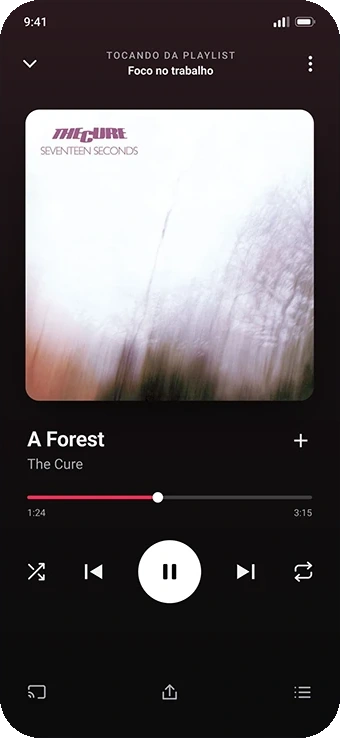
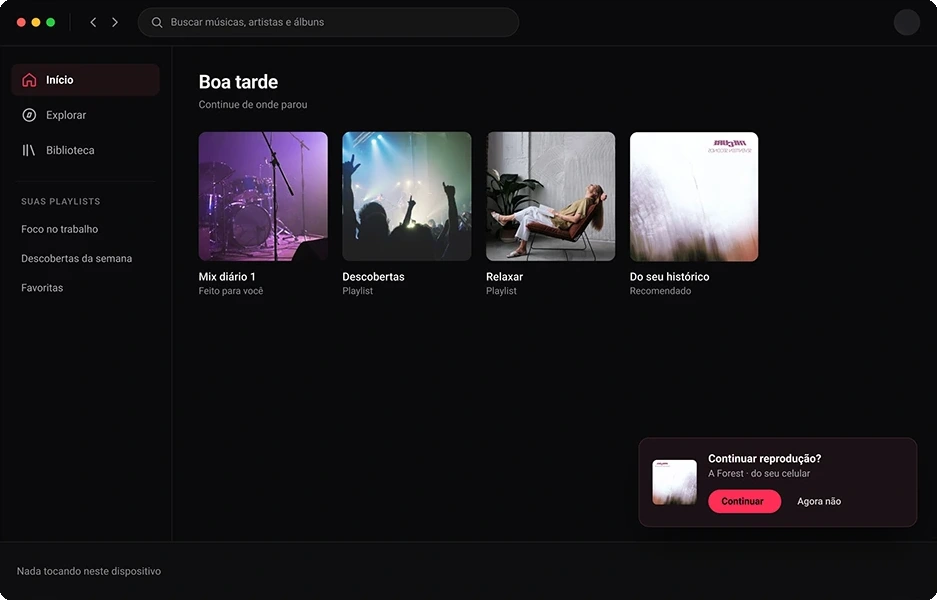
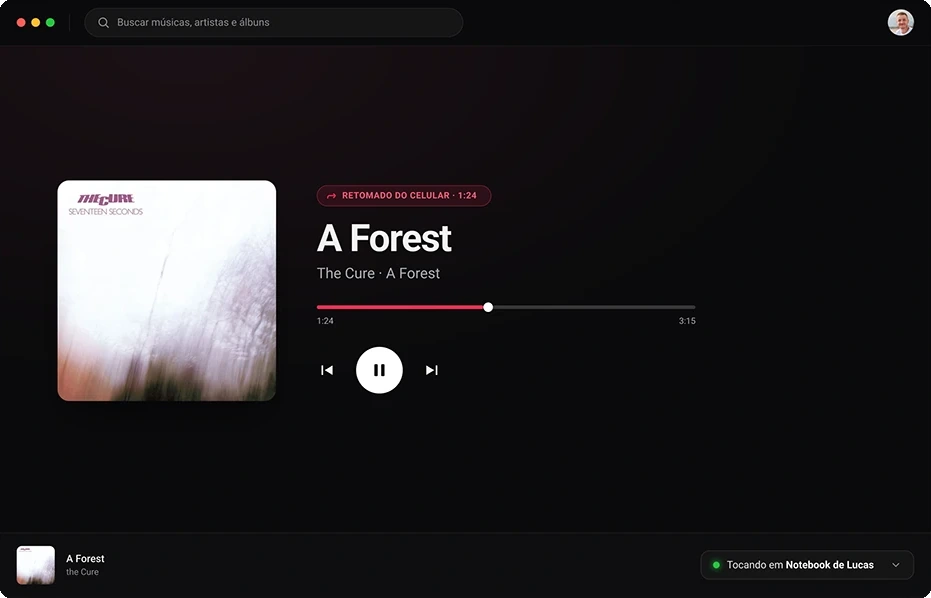
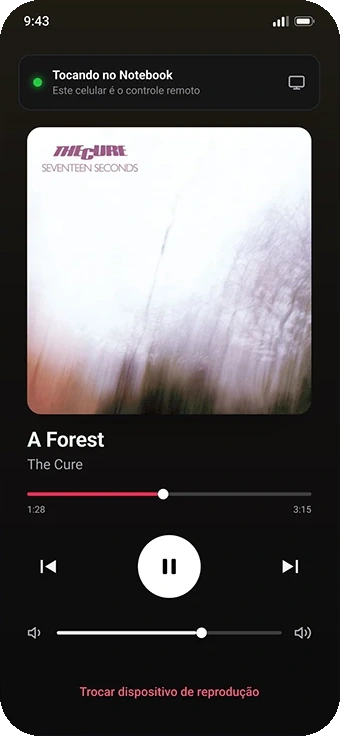
I prioritized transferring the listening session across devices. The concept recognizes the previous playback state, asks whether the user wants to continue and identifies which device has taken over the audio.
- Preserve context: retain the track and playback position.
- Offer continuity: present an invitation that can be accepted or declined.
- Explain the state: identify the session source and active device.
- Keep control: allow the phone to control playback on the computer.
Wireframes and early prototypes were explored with Claude Code. The final interfaces were refined in Figma.
04 / Four-step flow
The screens below show the proposed interaction. Each step responds to a difficulty identified during the investigation.
05 / Outcome and learning
The deliverable proposes 4 steps for resuming a session. In the diagnosis, 3 of 3 participants searched for the track manually; that result concerns the existing experience, rather than the effectiveness of this concept.
Turning scattered reports into an observable task made the problem more concrete. Observation revealed hesitation and expectations that comments alone could not show.
The work also reinforced the value of choosing one core behavior and supporting it throughout the flow: resume the session, confirm the transfer and show where the audio is playing.
The test investigated the problem in the existing experience. The solution is conceptual and still needs to be evaluated with users; there are no impact metrics from a launched product.
View the original Behance publication